
Exploring Plinko Board Physics in the Digital Realm
Plinko boards, a classic game often found in carnivals and game shows, epitomize the intersection of chance and physics. The appeal of watching a disc tumble through a maze of pins, unpredictably bouncing from one route to another, transcends physical boundaries and finds a new platform in the digital realm. In this article, we explore the underlying physics of Plinko boards and how these principles manifest in digital versions available today, such as on platforms like Plinko Board Physics Across Digital Platforms plinko-casino-game.co.nz.
The Physics Behind Plinko Boards
At its core, the Plinko game involves a simple yet profound interaction of stochastic processes, which are crucial in understanding the game’s mechanics. The basic design includes a vertical board with a series of pegs arranged in staggered rows. When a disc is released from the top, it begins its descent through the maze, colliding with the pegs and bouncing randomly to left or right.
This bouncing action can be analyzed through several physical principles, including gravity, momentum, and energy transfer. When the disc is dropped, gravitational acceleration acts on it, pulling it downward. Each time it strikes a peg, the disc’s direction changes as it loses momentum and gains a bit of kinetic energy in the new direction. This continuous exchange of energy and momentum creates complex patterns of movement that can be modeled mathematically, yielding probabilities for where the disc is likely to land at the bottom of the board.
Probability and Outcomes
The beauty of Plinko lies in its unpredictability, which is governed by probability. The arrangement of pegs leads to a fascinating mathematical landscape. Each route taken by the disc can be visualized as a unique path through a binary tree structure, where every peg represents a bifurcation—a decision point leading to a new potential path.
As the disc strikes a peg, it can either veer to the left or right, creating a dynamic that can be analyzed through various statistical models. The further down it goes, the more pathways diverge, leading to multiple possible outcomes represented visually in the final drop zone. The distribution of potential landing spots typically approximates a normal distribution, where the majority of outcomes cluster around the center and taper off toward the extremes. This principle is fundamental in understanding both classic and online Plinko games.
Digital Adaptations of Plinko Board Mechanics
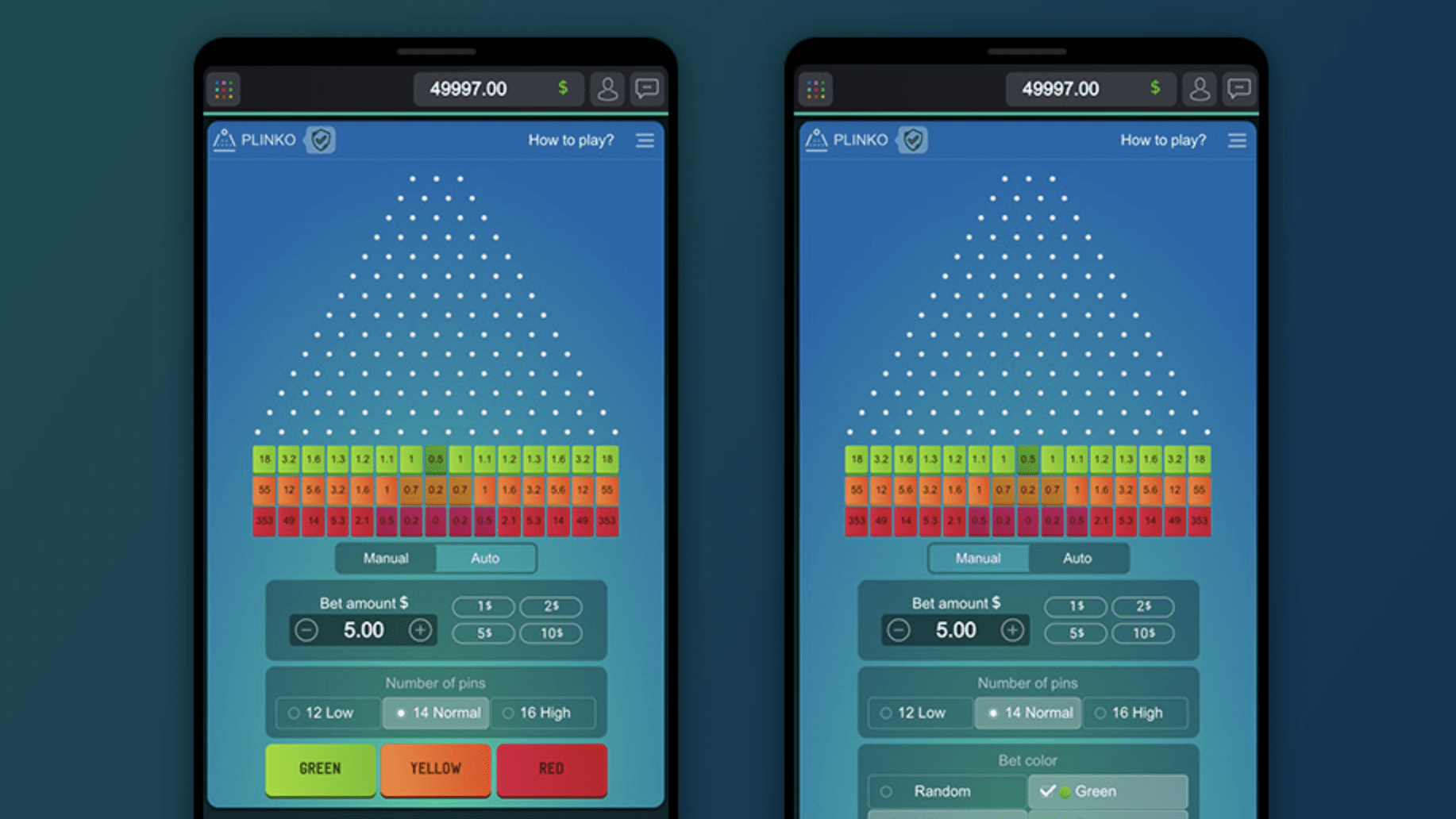
With the advancement of technology, the Plinko experience has migrated to digital platforms, enhancing accessibility and catering to wider audiences. Digital versions maintain the essence of the physical game while incorporating new features that enhance gameplay. In these adaptations, the foundational physics remain largely unchanged, but they are represented through animations and graphics that allow for real-time interaction.
In digital Plinko, players often use mouse clicks or touchscreen taps to initiate the drop of the disc, simulating the analog experience of dropping a physical disk. The random movements and outcomes are generated through algorithms that mimic the natural physics of the original board. These games also often include sound effects and visual cues that heighten engagement and excitement, providing a sensory experience that captures the thrill of chance.
Strategies and Game Mechanics
While Plinko is fundamentally a game of chance, players often develop strategies based on their observations. In physical and digital formats alike, players might notice patterns in how discs fall, leading them to believe in certain ‘hot’ or ‘cold’ slots. These beliefs can heavily influence decision-making, despite the underlying randomness.
For instance, in a digital game, players might choose where to drop their disc based on previous results—whether aiming for the center or a specific slot believed to yield higher rewards. However, it’s essential to recognize that, despite these strategies, the outcome remains largely random and governed by the same stochastic principles observed in traditional Plinko boards.
The Role of Technology in Enhancing the Experience
Modern digital Plinko games also leverage technology to enhance player engagement and experience. Features such as 3D graphics, animated effects, and soundscapes create a captivating environment. Furthermore, integrating social aspects—like leaderboards and multiplayer modes—helps cultivate a sense of community among players.
In addition, many digital platforms offer bonuses and rewards systems, allowing players to earn points or rewards based on their participation and performance. This gamification of the Plinko experience encourages players to engage more deeply with the game, exploring its various mechanics while enjoying an immersive and interactive experience.
The Future of Plinko in Digital Gaming
As technology continues to evolve, the potential for Plinko and similar games in the digital realm seems limitless. Innovations in virtual reality (VR) and augmented reality (AR) could take the Plinko experience to new heights, allowing players to engage with the game in entirely immersive environments. Envision a Plinko board where players could reach out and physically drop a disc in a virtual space, enriched by the visual and auditory feedback typically experienced in physical settings.
Moreover, the exploration of machine learning algorithms and artificial intelligence could lead to even more sophisticated statistical modeling, potentially revolutionizing how these games are approached and played. These advancements could improve the personalization of gameplay experiences, tailoring challenges and rewards to individual player preferences and styles.
Conclusion
The journey of the Plinko board from a physical carnival game to a dynamic digital experience showcases the captivating interplay between chance and physics. As we delve into this fascinating realm, we see how mathematical principles govern not only the physical mechanics but also the excitement and unpredictability that make Plinko so engaging.
Understanding the underlying physics allows players to appreciate the complexities of the game more deeply, while the digital adaptations open avenues for innovation and engagement that continuously evolve. The future of Plinko, enriched by technological advancements, promises to enhance this classic game in ways we are only beginning to imagine.